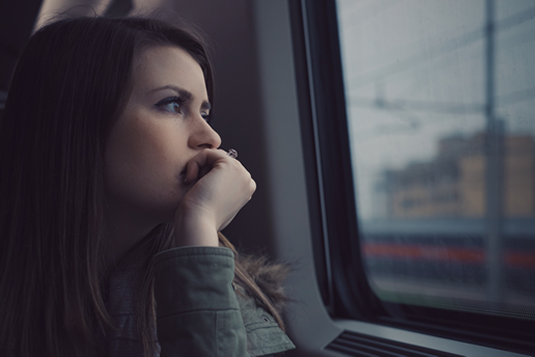
Circadian Rhythm Sleep Disorder
Like all living things, humans too have a natural mechanism known as the biological rhythm which functions on an every day time scales and durations. Biological rhythms have a strong influence and affect on the body’s sleeping patterns, alertness during waking hours and also the overall temperature of the body. If the person does not get the amount of sleep that is required by the body each day, he will find it difficult to remain awake, as his internal circadian rhythm indicates that the body requires rest.
The circadian rhythm sleep disorders are a group of specific disorders which mainly affect the sleeping time and routine among various other things as well. Patients suffering from one of these disorders face immense difficulty in waking up for school or work, and in sleeping when it is time for rest. If allowed enough time, these people sleep well and from then onwards, the routine follows as guided by their natural clocks. Their sleep is usually fulfilling and normal in the absence of any other disorder associated to sleeping routine and patterns. These disorders are generally misdiagnosed by physicians as they are unaware of their existence and they have a profound effect on the physiological as well as psychological well being of a patient[1].
What is a normal circadian rhythm?
There are two types of people who have “normal” circadian rhythms, these are the “larks” or the morning people who sleep relatively early and wake up early. Then there are the “night owls” who sleep late and also wake at late times. These people all have normal circadian rhythms and the choronotype continues from the morning people to the evening or night people. People who have normal circadian rhythms have the following features:
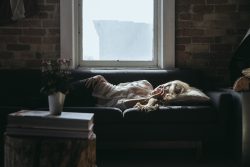
Circadian Rhythm Sleep Disorder can have a negative affect on your health.
- They can wake up without difficulty for their morning routine and fall asleep without difficulty at night.
- They generally stick to the same routine which may vary slightly from the norm.
- They can generally sleep and also wake at the same times if they desire to do so.
- If they decide to wake up earlier than they used to, they will also start sleeping earlier than they used to and adjust to the new routine within a few days. A relevant example is a person who used to sleep around 12 at night and woke at 8 am starts a new job that requires them to be up by 6 am to get ready and reach work on time. Within a few days that person’s cycle shifts and he or she may start falling asleep at 10 pm instead of 12. This is known as “advancing the sleep phase”. People who are sound of health can advance their sleep phases by one hour every day. Such people adjust their sleep cycles without any difficulty and feel rested and fresh after a full nights rest.
According to research for a person to be able to adjust their biological clock, they need environmental cues such as sun rise, sun set, and a daily set routine. These time cues keep the biological clock running and don’t cause a haphazard routine. These cues are also known as Zeitgeber cues. People with circadian rhythm sleep disorders are unable to maintain a regular sleep cycle or routine and tend to have a disrupted pattern of sleep.
Circadian rhythm abnormalities
Disorders associated to disturbed or irregular sleeping and waking patterns occur due to the inability of the body to reset the waking and sleeping routines in accordance with the normal environmental times.
Types of circadian rhythm sleep disorders
Extrinsic type
The extrinsic types of circadian rhythm sleep disorders include two common varieties which are:
- Jet lag: this is commonly experienced by people who have traveled across different time zones in one stretch.
- Shift Work Sleep Disorder[2]: Another disorder which mainly affects people who work during night shifts, or rotating shifts which are frequently changed.
Intrinsic type
There are four disorders that fall under the intrinsic category; these have been enlisted as follows:
- DSPD, or Delayed Sleep Phase Disorder[3]: This disorder occurs when the onset of sleep occurs at a time which is relatively late compared to the norm. This disorder is also sometimes referred to as the DSPS, or the Delayed Sleep Phase Syndrome.
- The ASPS or the Advanced Sleep Phase Syndrome: This disorder presents as the difficulty in remaining awake during the evening, and also in sleeping during the morning.
- Non-24, also known as the Non-24-hour sleep-wake Syndrome: This syndrome occurs when the person’s sleeping routine shifts to an hour later than the previous as each day passes. This automatically has an effect on the alertness of the individual.
- Irregular Sleep-Wake Rhythm: The classic presentation of this disorder is irregular sleeping timings that occur twice or more than twice in one day.
Treatments for circadian rhythm sleep disorders
Some of the treatments that may prove effective for circadian rhythm sleep disorders include the following:
- Adequate and effective therapy and consultation for the improvement of sleep routines. The patient must be advised against caffeine, short naps and other factors that may affect the routine before sleep.
- Advise patients to not to use the bed unless it is for sex or sleep.
- In order to delay sleep, one of the most effective therapies includes the Bright Light Therapy for thirty minutes to an hour depending upon the requirement.
- Medicines such as melatonin can be prescribed. Melatonin is an effective pharmacological solution for sleep related disorders and promotes a naturally occurring sleep
- Wake promoting agents or shot term sleep aids can be prescribed
- Another therapy that is used to delay or advance sleep for an hour or two is known as the Sleep Phase Chronotherapy
References:
- http://www.smrv-journal.com/article/S1087-0792(01)90190-X/abstract
- Dr. Nancy Foldvary-Schaefer:The Cleveland Clinic Guide to Sleep Disorders
- http://my.clevelandclinic.org/Documents/Sleep_Disorders_Center/Circadian_Rhythm.pdf